Haptic Feedback Integration: Measuring Its Effects on Retention in Online Battle Arenas
Viktor Wolf · Nov 23, 2026
Haptic Feedback Integration: Measuring Its Effects on Retention in Online Battle Arenas
Multiplayer online battle arenas rely on precise timing and sensory cues to maintain engagement, and haptic feedback has emerged as a key element in hardware design since the mid-2010s. Developers integrate vibration motors and force feedback systems into controllers and peripherals to simulate impacts, ability activations, and environmental changes. Research from the Entertainment Software Association indicates that titles incorporating advanced haptics report measurable differences in session lengths compared to those without such features.
Core Mechanisms of Haptic Technology in MOBAs
Standard controllers transmit basic rumble patterns during combat sequences, while newer systems use directional actuators to distinguish between incoming damage from different map directions or ability types. Players receive distinct tactile signals for events like tower attacks, minion waves, or ultimate ability cooldowns, and this differentiation reduces the cognitive load during fast-paced matches. Studies conducted by academic teams at institutions in Canada and Australia demonstrate that these layered signals correlate with fewer premature disconnections in ranked queues.
Hardware manufacturers have refined motor arrays to support variable intensity levels, allowing developers to map low-frequency pulses to subtle environmental effects such as fog movement or high-frequency bursts to critical hits. Integration occurs through software layers that sync with game engines, and updates released around November 2026 expanded compatibility across mobile and console platforms simultaneously.
Retention Metrics and Available Data
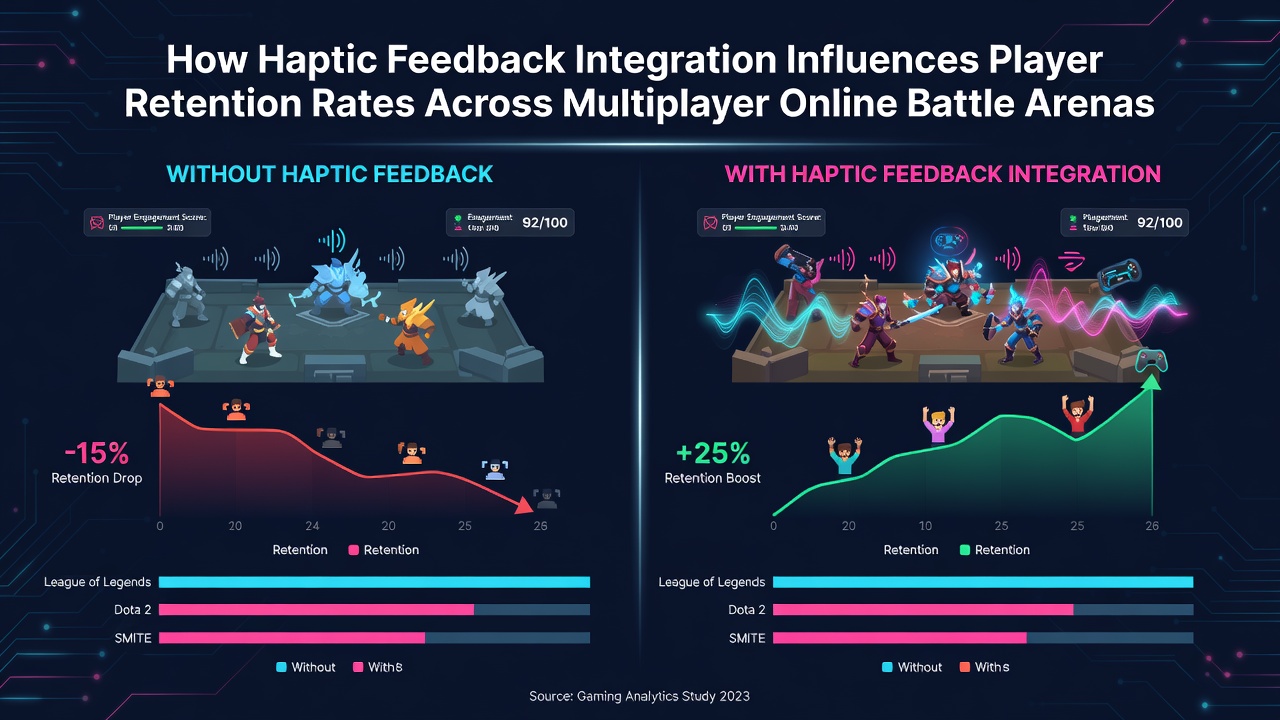
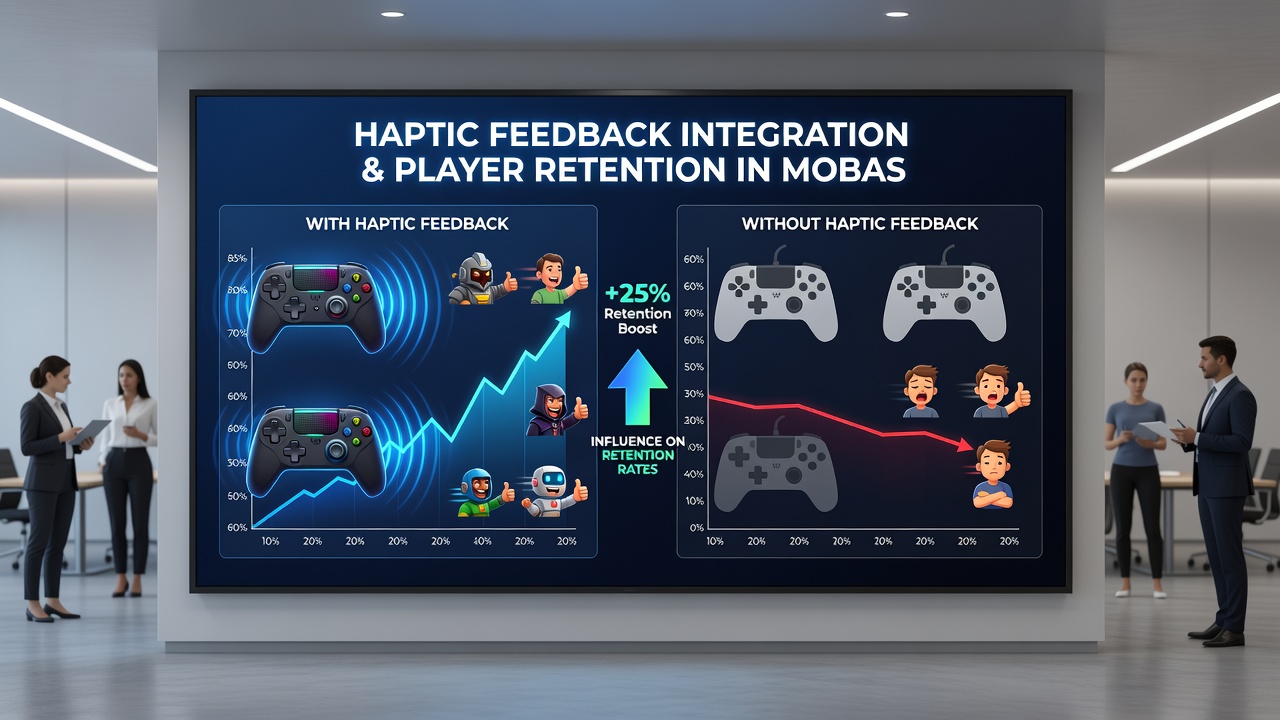
Retention tracking typically measures daily active users alongside average match completion rates. Figures from industry reports show that MOBAs with refined haptic profiles maintain higher week-over-week player counts, particularly among participants using dedicated controllers rather than touch interfaces. One analysis covering titles from 2024 through late 2026 found retention lifts ranging from eight to fifteen percent in cohorts exposed to updated vibration libraries versus control groups.
Those who studied implementation logs note that teams coordinating haptic events with audio cues achieve stronger synchronization effects. Data indicates players continue sessions longer when feedback aligns with visual kill notifications and map pings, creating a closed loop of sensory confirmation that reinforces successful actions.
Implementation Patterns Across Major Titles
Leading arena games apply haptics selectively to avoid overwhelming users during extended play windows. Core ability activations often receive priority mapping, whereas passive effects receive lighter treatment. Observers note that patches deployed in 2025 adjusted intensity curves based on player heatmaps, resulting in more consistent engagement across different skill brackets. European research groups tracking cross-platform data have documented similar adjustments improving return rates on European servers.
Take one developer team that recalibrated controller responses for crowd control effects; subsequent telemetry showed reduced rage-quit incidents during late-game team fights. Another case involved mobile versions where adaptive triggers on newer handsets delivered proportional resistance during charged attacks, and figures revealed extended play sessions among users who activated those features.
Hardware and Platform Considerations
Console ecosystems standardized haptic APIs earlier than mobile environments, yet recent firmware updates have narrowed the gap. Low-end devices now support basic vibration profiles through software emulation, while flagship models deliver full spatial feedback. Analysts tracking hardware adoption rates point out that players upgrading to haptics-compatible peripherals demonstrate stronger loyalty metrics across seasonal events.
Network latency remains a limiting factor in online matches, and developers compensate by prioritizing local haptic processing over server-synced events. This approach preserves responsiveness even when ping fluctuates, and reports from North American infrastructure studies confirm stable performance under variable conditions.
Trends Emerging in Late 2026
November 2026 brought new controller firmware supporting real-time intensity scaling based on match context. Early telemetry suggests these refinements further separate retention curves between haptic users and non-users. Industry organizations continue to compile comparative datasets across regions to identify optimal mapping strategies.
Conclusion
Evidence gathered from multiple sources shows consistent associations between haptic integration and improved retention indicators in multiplayer online battle arenas. Continued refinement of actuator technology and mapping protocols will likely shape future hardware standards as developers respond to aggregated player behavior data.