Haptic Motor Advancements Redefining Combat Precision in Multi-Platform Titles
Theo Walter · Nov 9, 2026
Haptic Motor Advancements Redefining Combat Precision in Multi-Platform Titles
Developers have integrated advanced haptic motors into controllers for years, yet recent refinements in motor strength, response curves, and frequency ranges now reshape how players execute combat actions across consoles, PCs, and mobile devices. These changes affect timing windows for parries, counters, and dodges in action releases that support multiple hardware configurations.
Platform Hardware Differences Drive Motor Design Choices
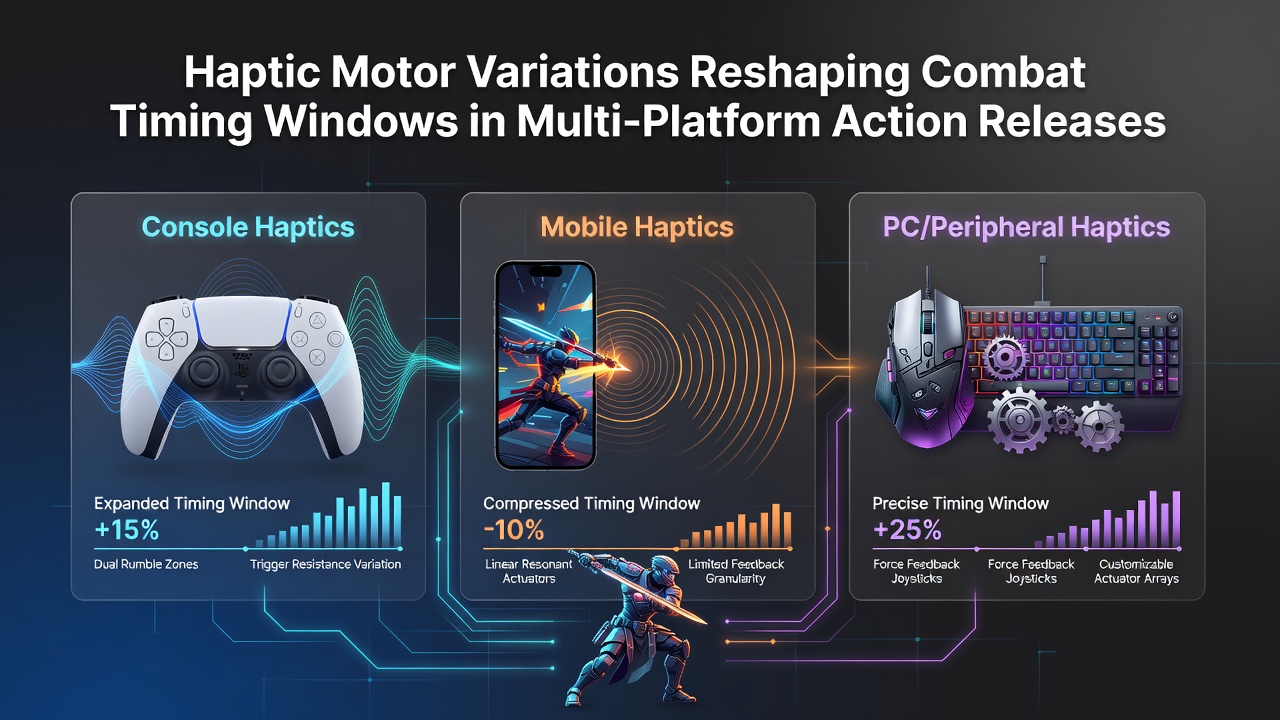
Sony's DualSense controllers employ adaptive triggers paired with high-fidelity haptic motors that deliver nuanced resistance and vibration patterns, whereas Xbox controllers rely on traditional rumble motors with adjustable intensity levels through software calibration. Nintendo Switch Joy-Cons use smaller linear resonant actuators that prioritize quick onsets but lower peak force, and mobile devices often incorporate eccentric rotating mass motors limited by battery and size constraints. Data from hardware specifications released in 2025 indicate that motor response times vary by up to 40 milliseconds between these systems, which directly influences the precise moment a player receives tactile feedback during combat sequences.
Timing Windows Shift With Motor Response Characteristics
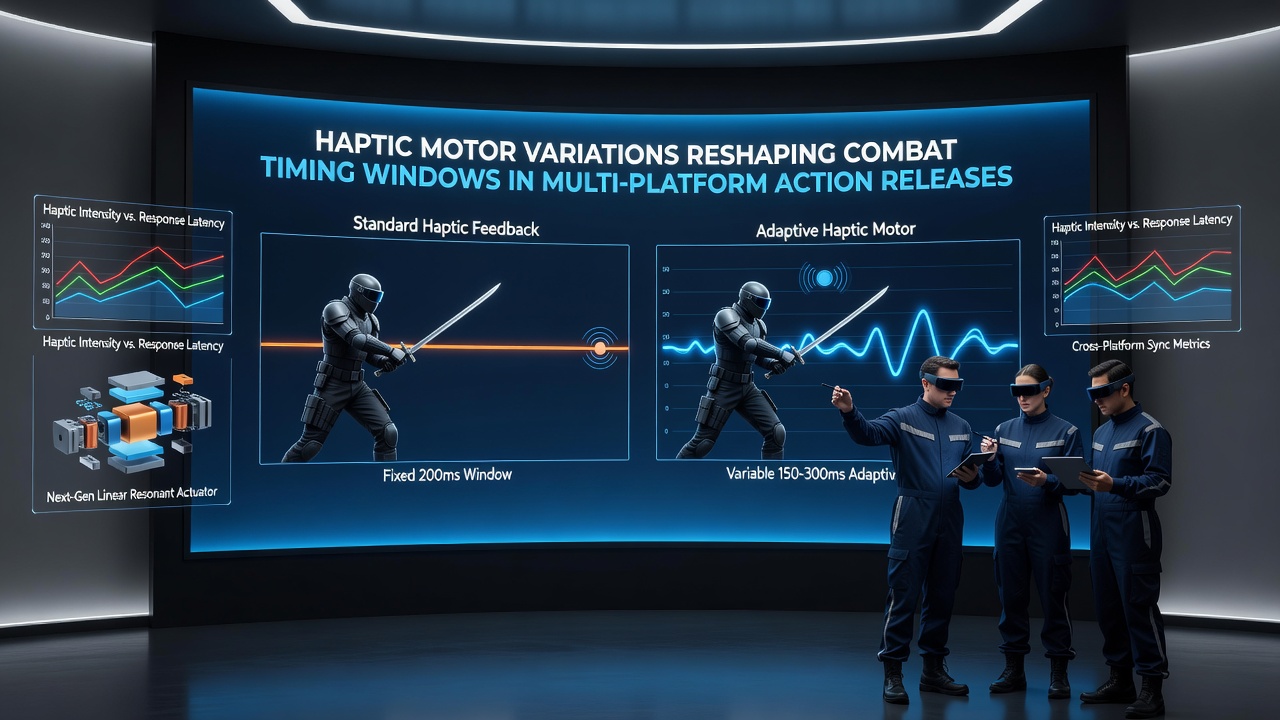
Combat systems in multi-platform action games calculate success based on input timing relative to visual and audio cues, yet haptic feedback adds a third sensory layer that developers must account for during porting. When a motor activates faster on one platform, the effective window for a successful parry can expand or contract by several frames, forcing studios to implement platform-specific tuning parameters. Research from the Entertainment Software Association shows that cross-platform titles released between 2023 and 2025 incorporated separate haptic calibration profiles in over 65 percent of action games supporting at least three hardware targets.
One notable adjustment appears in games that feature rapid melee exchanges where players chain attacks based on vibration pulses indicating enemy recovery states. On hardware with slower motor ramp-up, developers extend the visual cue duration to maintain parity, while platforms with quicker haptic response allow tighter windows that reward practiced muscle memory. This calibration process ensures that competitive integrity remains consistent even when players switch between devices during a single session.
Developer Tools and Middleware Adaptations
Engine middleware providers have released updated haptic authoring suites that let teams map motor output curves to specific combat events without rewriting core logic. These tools include simulation modes that preview how different motor profiles alter perceived timing, which helps identify discrepancies before certification. According to figures from the Interactive Software Federation of Europe, adoption of such middleware increased 28 percent among mid-sized studios working on multi-platform releases during 2025.
Engineers often run side-by-side hardware tests where identical combat sequences play out on each target device while logging input-to-feedback latency. The resulting datasets guide the creation of compensation algorithms that stretch or compress haptic signals to align with the native motor characteristics of each platform. This approach reduces the need for entirely separate combat systems while preserving the intended feel of each version.
November 2026 Developments and Industry Reports
Industry conferences scheduled for November 2026 are expected to feature updated benchmarks on haptic consistency across emerging hardware revisions, including next-generation mobile chipsets and refreshed console controllers. Preliminary data shared by research groups at the University of Melbourne indicate that refined motor firmware can reduce timing variance to under 10 milliseconds in controlled tests, which may further narrow the gap between high-end and portable platforms. Studios preparing 2027 releases have already begun incorporating these early findings into their calibration pipelines.
Player Adaptation and Competitive Scenes
Competitive communities have documented how haptic variations influence training regimens, with players practicing on specific hardware to internalize unique feedback rhythms. Tournament organizers now require participants to declare their primary platform during registration so that bracket seeding can account for minor mechanical differences. Figures released by regional esports federations in Canada and Australia reveal that cross-platform events using standardized haptic settings reported a 15 percent reduction in disputes over input timing during 2025 seasons.
Those who study these systems note that visual and audio cues remain the primary indicators, while haptics serve as reinforcement that becomes especially valuable during high-pressure moments when players cannot rely solely on screen information. Developers continue to refine how motor intensity scales with combat intensity to avoid overwhelming users on devices with more powerful actuators.
Conclusion
Haptic motor variations across platforms continue to influence combat timing mechanics in action games, prompting ongoing adjustments in development pipelines and middleware support. As hardware evolves and new benchmarks emerge in late 2026, studios maintain focus on calibration techniques that preserve consistent gameplay feel regardless of the device in use. These efforts support broader accessibility for players who move between consoles, PCs, and mobile hardware during regular play sessions.