Shifting Hardware Priorities: How Memory Limits Shape Narrative Choices in Hybrid Platform Releases
Theo Walter · Oct 26, 2026
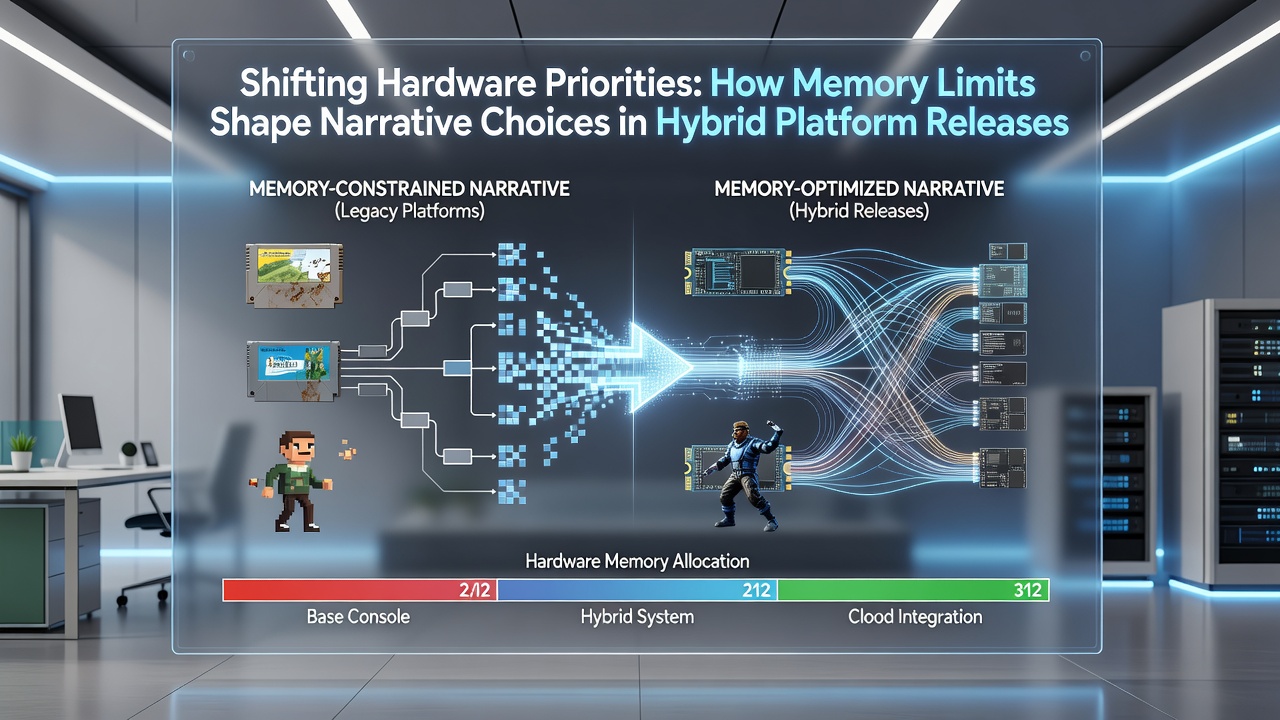
Shifting Hardware Priorities: How Memory Limits Shape Narrative Choices in Hybrid Platform Releases
Hybrid platforms combine portable and stationary capabilities in single devices, which forces developers to manage varying memory capacities across modes while maintaining consistent player experiences, and data from industry reports indicate that these constraints directly influence how stories unfold in games released for such systems.
Hardware Specifications and Memory Allocation Patterns
Devices like the Nintendo Switch and its successors allocate different RAM amounts depending on whether they operate in handheld or docked configurations, with handheld modes often limited to around 4GB effective memory after system overhead while docked setups access closer to 6GB or more, according to technical specifications published by hardware manufacturers, and this split creates trade-offs during development cycles that began accelerating in 2023 and continued through October 2026 when updated platform analytics showed increased hybrid adoption rates across multiple regions.
Developers must prioritize asset streaming and compression techniques to fit narrative elements such as character models, voice lines, and environmental details into available memory pools, while studies from the Entertainment Software Association reveal that cross-mode consistency requires careful partitioning of resources so that story branches do not exceed hardware thresholds in any configuration.
Narrative Design Adaptations Under Resource Constraints
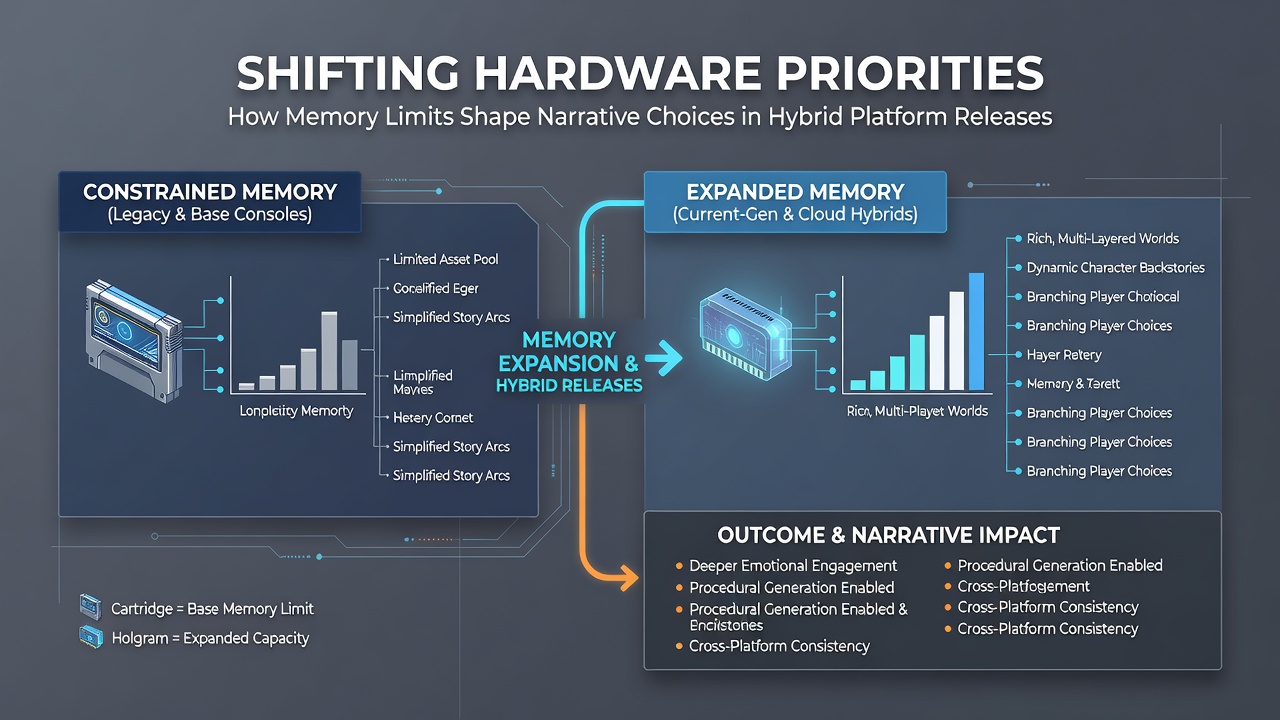
Memory limits encourage linear storytelling structures in many hybrid titles because branching paths demand simultaneous loading of multiple dialogue trees, background assets, and animation sets that quickly exhaust available RAM, and researchers at academic institutions in Canada have documented cases where studios reduced optional narrative content to ensure stable performance across modes.
Yet game teams frequently implement dynamic loading systems that stream story segments based on player progress, allowing complex plots to unfold without preloading everything at once, while data from university-led analyses in the European Union show that such methods preserve narrative depth even when total memory stays below 8GB thresholds typical of portable hardware.
One example involves titles that use procedural dialogue generation to minimize stored text assets, which reduces memory footprint and lets developers focus remaining resources on core story delivery rather than exhaustive choice libraries.
Case Examples from Recent Hybrid Releases
Studios working on adventure games for hybrid platforms have shifted toward chapter-based progression where each segment loads independently, and this approach documented in technical post-mortems prevents memory spikes that could interrupt narrative flow during transitions between portable and stationary play.
Figures from 2026 development surveys indicate that teams allocate up to 30 percent of available memory specifically for audio and script data in story-heavy titles, leaving the balance for visual rendering and gameplay systems, and such allocations appear consistently across projects that maintain cross-mode parity.
Observers note that role-playing games often limit companion AI complexity in portable modes to free memory for extended cutscenes, whereas docked sessions unlock additional interaction layers without altering the underlying plot structure.
Industry Tools and Optimization Strategies
Engine updates released after 2024 introduced better memory profiling tools that let developers simulate hybrid constraints during early prototyping, and reports from research institutions in Australia highlight how these tools help identify narrative sections that require redesign before full production begins.
Compression algorithms tailored for text and voice data further reduce storage needs, enabling more dialogue options within the same memory envelope, while industry organizations track adoption rates showing widespread integration of these methods by mid-2026.
Conclusion
Memory limits in hybrid platforms continue to guide narrative decisions through technical necessity rather than creative preference, with developers relying on streaming, compression, and modular story design to deliver coherent experiences across configurations. Data from multiple geographic sources confirm that these adaptations have become standard practice, shaping how interactive stories reach audiences on devices that blend portability with higher-performance stationary use.